Leg Pain

HomeVein Problems – Leg Pain

Leg Pain

Conditions Addressed with Our Expert Care

Vein specialist will be able to evaluate the legs with ultrasound for any possible chronic, persistent venous abnormalities. Especially if the legs feel heavy and sore. When frequent cramps cause sleepless nights. When restless legs disturb relaxation during sleep.

What symptoms warrant immediate medical attention?

You may notice one or more of the following:

What are the possible causes of leg pain?

Cramps (muscle spasms / “charley horse”)

Sudden, sharp pain in the leg muscles, often at night. Can be linked to dehydration, nutrient deficiencies, medication side effects, and also undiagnosed varicose veins or other vascular abnormalities.

Injuries

Muscle strains, tendinitis, bursitis, fractures, and shin splints. Pain may range from mild soreness to severe discomfort, often worsening with movement, pressure, or activity and improving with rest or support.

Deep Vein Thrombosis (DVT)

Requires immediate medical attention. A blood clot forms in a vein and may move toward the lungs or other vital organs. Symptoms can include swelling, warmth, redness, and tenderness, and the condition can become life-threatening without prompt treatment.

Vein disease (varicose veins)

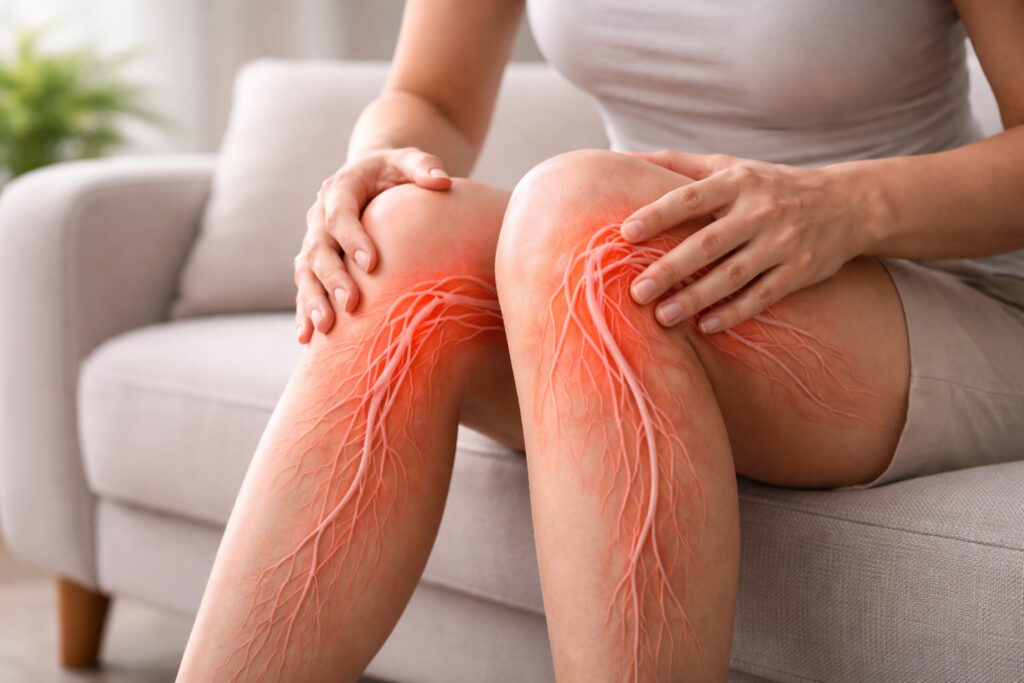
Undiagnosed varicose veins are a common reason for heavy, sore, swollen legs, especially at the end of the day. Varicose veins may stay invisible for years; when visible, they appear as twisted bluish/purplish cords caused by weak valves in the veins.

Arterial disease / atherosclerosis (Peripheral Vascular Disease, PVD)

Sudden leg pain with a cold, pale limb can signal an arterial blood clot and is a medical emergency. Most PVD is chronic and involves narrowing/hardening of artery walls (smoking, diabetes, high cholesterol), reducing blood flow to muscles and causing painful, crampy pains during activity or at night.

Lower back problems (herniated/slipped disc) and sciatica

Pain radiates into the legs with a pulling or burning sensation. It may worsen with sitting, bending, or lifting, and can be accompanied by weakness or numbness depending on which nerve roots are affected.

Nerve damage in the legs

Can result from direct injury or chronic medical conditions (such as diabetes) and may cause tingling, numbness, and pain. Symptoms often feel like burning, pins-and-needles, or electric shocks, and may be worse at night or with prolonged standing.

Tumors (malignant or benign)

Growths can contribute to leg pain. Discomfort may develop gradually, persist without clear injury, and sometimes increase at night, while nearby tissues or nerves can be irritated as the tumor enlarges over time.

Gout

Can cause painful inflammation affecting the leg. Attacks often come on suddenly with intense pain, redness, warmth, and swelling around a joint, and may be triggered by diet, dehydration, or other metabolic factors.

Infection

Infection of any leg structure can produce pain. It may cause swelling, redness, warmth, and tenderness, sometimes with fever or worsening discomfort, and can involve skin, muscle, bone, or deeper tissues.

Overuse and repetitive strain

Repeated activity can irritate muscles, tendons, and joints, leading to persistent soreness or sharp pain during walking or exercise. Symptoms often build gradually, worsen after activity, and improve with rest, stretching, or modifying workouts.

Other causes

Pes planus, multiple sclerosis, low thyroid level, and lymphedema. These conditions can contribute to aching, heaviness, weakness, swelling, or cramping, and symptoms may vary depending on the underlying cause and severity.

Ready to get answers - and relief?

Call Our Office

Call to choose Addison or Palos Hills office.

Send Message

Reach out online for scheduling and general questions.
How to prevent leg pain

Simple habits that protect your legs

Leg pain often develops when muscles and blood vessels are under extra strain from inactivity, poor circulation, dehydration, or ongoing health conditions. The good news is that many common causes of leg discomfort can be reduced with consistent daily habits and healthier lifestyle choices.

The steps below focus on improving circulation, supporting muscles and joints, and lowering risk factors that contribute to vascular and nerve-related leg pain. Use this checklist as a simple prevention guide and aim to make small changes that you can maintain long-term.