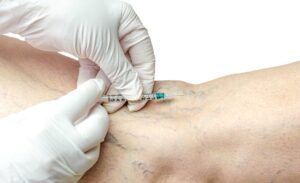
If you’ve been considering sclerotherapy to treat varicose or spider veins, you’re not alone. Many patients throughout the Chicago area seek this minimally invasive treatment every year — but the #1 question they ask is:
“Will my insurance cover sclerotherapy?”
The short answer: Sometimes yes — but only when the treatment is medically necessary.
Here’s what patients in Illinois should know before scheduling a consultation at The Institute for Vein Health, led by Peter Brukasz, MD, DABVLM.
When insurance may cover sclerotherapy
Insurance companies are more likely to approve sclerotherapy when it is not cosmetic, but instead required to treat an underlying medical condition.

Insurance may cover the procedure if you have:
Pain, swelling, or heaviness in the legs
Discomfort, throbbing, burning, and fatigue are common symptoms of venous insufficiency.
Skin changes, discoloration, or ulceration
These are signs of worsening venous disease and typically qualify as medical necessity.
Ultrasound-confirmed venous reflux
If a diagnostic ultrasound shows improper blood flow, insurers often approve treatment.
Failed conservative therapy
Insurance providers usually require at least 6–12 weeks of:
- Compression stockings
- Leg elevation
- Activity modification
If symptoms persist, sclerotherapy is more likely to be covered.
When insurance usually does NOT cover sclerotherapy
Insurance typically does not cover sclerotherapy if the purpose is purely cosmetic, such as:
- Small spider veins with no pain
- Visible veins that do not impair daily function
- Treatments done for appearance only
In these cases, sclerotherapy is considered an out-of-pocket procedure.
How to know what YOUR insurance will cover
Coverage varies by insurance provider and plan. To avoid surprises, patients should:
1. Schedule a vein evaluation
A thorough exam by Peter Brukasz, MD, DABVLM at The Institute for Vein Health allows you to determine whether your symptoms are cosmetic or medical in nature.
2. Get a diagnostic ultrasound if needed
Ultrasound imaging (when medically indicated) is often required for insurance authorization.
3. Document symptoms
The more clearly symptoms are recorded — heaviness, pain, cramping, swelling — the stronger your insurance case.
4. Request pre-authorization
The Institute for Vein Health can help submit required documentation to your insurance provider.
Why Chicago patients choose The Institute for Vein Health
Led by Dr. Peter Brukasz, MD, DABVLM, The Institute for Vein Health is one of the Chicago area’s trusted vein-care centers.
Their focus is on diagnosing vein disease early and providing minimally invasive treatment options — including sclerotherapy.
Related Treatments You Can Explore:
- Sclerotherapy →
https://instituteforvein.com/varicose-and-spider-veins-treatments/sclerotherapy/ - Varicose Vein Laser Treatment →
https://instituteforvein.com/varicose-and-spider-veins-treatments/varicose-veina-laser-treatment/
The clinic serves patients throughout Chicago and the surrounding suburbs, offering modern, comfortable care in a patient-centered environment.