
Home – Vein Problems – Pregnancy Related Vein Diseases
Venous disorders and leg health problems are among the most frequent medical conditions during pregnancy. For example, swollen feet, tired aching legs and a feeling of heaviness in the legs are among everyday symptoms that pregnant women may experience.
During pregnancy, many hormonal changes occur in the body that have a profound effect on the veins. Blood volume increases between 40 percent to 50 percent, while increased amounts of progesterone cause the vein walls to dilate and become less elastic.
Pregnancy places extra pressure on the veins in the legs while hormones make vein walls more relaxed, so blood can pool more easily and symptoms may feel stronger as pregnancy progresses. Recognizing the risk factors and early warning signs can help you reduce discomfort and know when a vein evaluation is recommended.
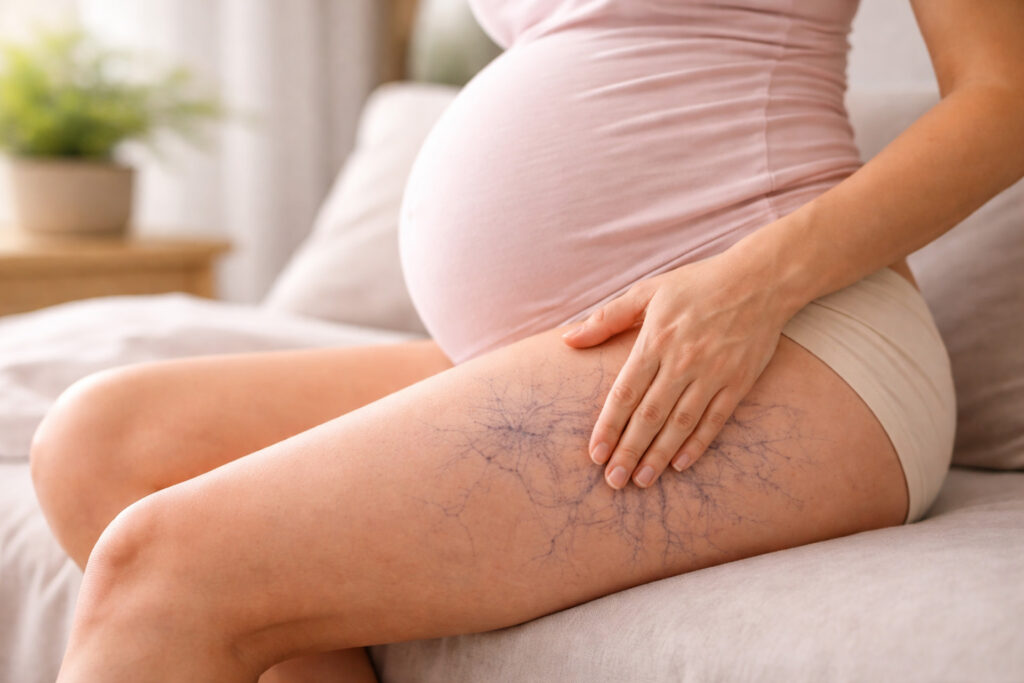
Mild swelling and heaviness can be common during pregnancy, but some symptoms may suggest an underlying vein problem that needs medical evaluation. If you notice worsening leg pain, one-sided swelling, new visible varicose veins, skin color changes, or discomfort that does not improve with rest and compression, it is a good idea to schedule a vein consultation.
A vein specialist can assess your circulation, confirm whether symptoms are related to venous insufficiency, and recommend safe, pregnancy-appropriate options to relieve discomfort. Early evaluation can also help you plan postpartum treatment if needed, so you can recover faster and reduce the chance of long-term vein complications.
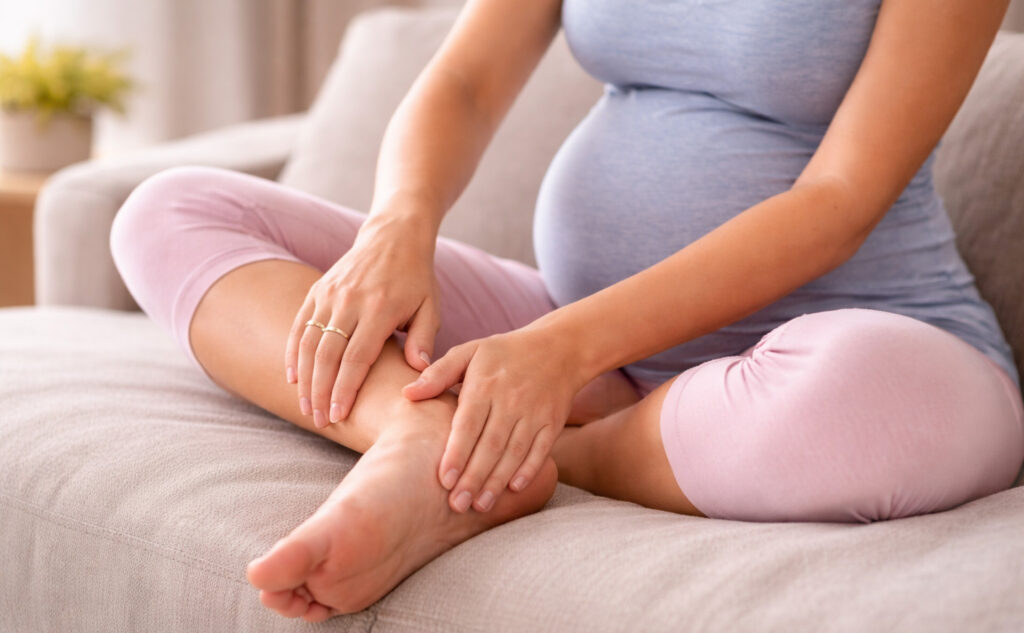
Compression therapy is a simple, drug-free way to support healthy circulation and reduce common pregnancy-related leg symptoms.
Clinical studies show that graduated compression stockings are beneficial and should be a mainstay in relieving symptoms of chronic venous insufficiency during pregnancy and the post-partum period. Graduated compression hosiery is the most effective way to prevent edema or swelling. It also alleviates leg pain and heaviness and contributes to prevent spider veins or varicose veins.
If you experience any symptoms of vein disease during your pregnancy, it is very important to see a vein specialist for full evaluation. At the Institute for Vein Health we can help you prevent varicose and spider veins during your pregnancy and treat any vein problems after delivery.
During pregnancy, increased blood volume and pressure on the leg veins can lead to swelling, heaviness, and aching. Graduated compression stockings gently support the legs, improve blood flow back toward the heart, and help you stay more comfortable throughout pregnancy and after delivery.